

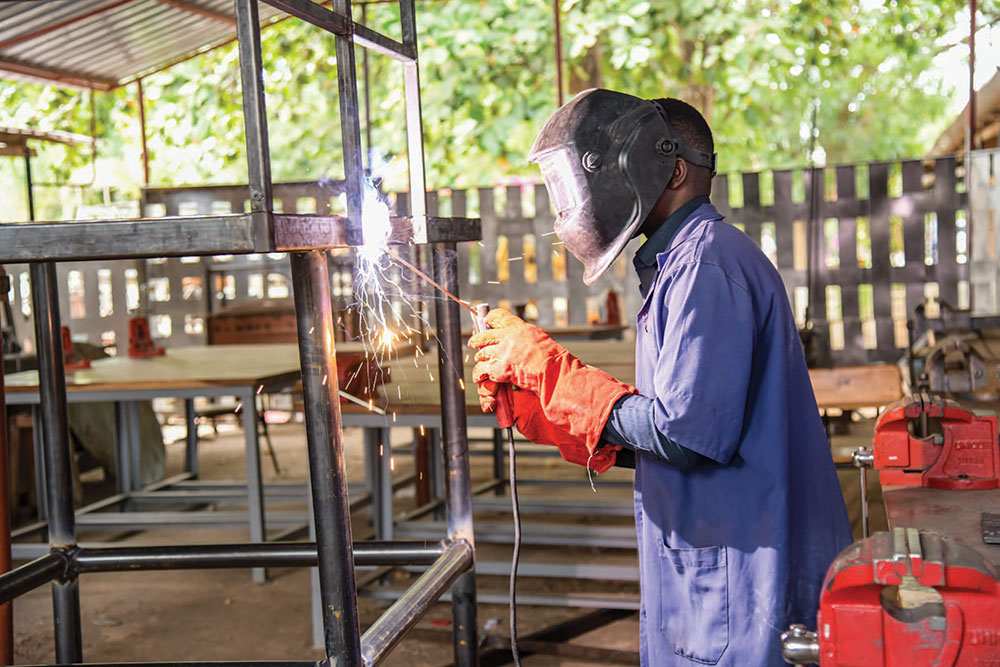
Strengthening Technical Training for Tanzanian Youth: First Phase of Don Bosco KIITEC’s Expansion Toward Financial Sustainability, Arusha, Tanzania
The project was designed to support the strategic expansion of Don Bosco Kilimanjaro International Institute of Technology (DB KIITEC) as a key provider of quality Technical and Vocational Education and Training (TVET) in Tanzania. The intervention is meant to respond to the increasing national demand for highly skilled technicians and technologists in emerging sectors, particularly renewable energy, automation, robotics, artificial intelligence, and digital technologies. The project was further designed to also contribute to the national agenda of strengthening workforce development in line with Tanzania's industrialization ambitions and Vision 2050, as well as to achieve Don Bosco Tanzania’s priority 06, which aims to strengthen the capacity of Don Bosco technical institutes and colleges through the development of well-resourced learning environments and the delivery of high-quality, employability-oriented training in emerging technologies. The long-term vision of the project is to transform DB KIITEC into a financially sustainable and nationally recognized Centre of Excellence capable of delivering industry-responsive training while reducing dependence on external donor support. The project design concentrates on implementing Phase I of the institutional expansion, which focuses on strengthening both the physical and academic capacity of the institute to accommodate a larger student population and deliver high-quality competency-based education using modern technologies and teaching methodologies.
DB Implementing Partners Abroad: DB Jugend Weltweit
DB Project Implementing partners; DBKIITEC
Project Manager: Cassian Bilikwija
Key Team Members: Mawazo Chapaulinge, Oswald Manyerere & Gideon.
Current Status:
Project Value: Tshs. 3,798,656,672.32
The intervention is being implemented through four mutually reinforcing components:
• Construction and Infrastructure Development: Development of new classrooms, offices, workshops, and modern laboratories equipped to support training in renewable energy, robotics and automation, data science, and artificial intelligence in accordance with Phase I of the institutional master plan.
• Curriculum Review and Modernization: Revision and enhancement of four academic programmes, including Solar and Renewable Energy, to integrate multidisciplinary competencies, digital technologies, and industry-driven skills while maintaining compliance with NACTVET requirements.
• Capacity Building: Strengthening the competencies of instructors through Training of Trainers (ToTs), industry attachments, professional certification, and collaboration with academic and industrial partners.
• Labour Market Integration: Enhancing graduate employability through strengthening the Job Service Office, promoting structured industry engagement, establishing Industry Advisory Boards, organizing career fairs, and conducting tracer studies to inform continuous programme improvement.
As of July 2026, the project is in Construction of the four-storey academic building (the flagship infrastructure investment under Phase I of the institutional master plan) has reached approximately 80% physical completion. Significant milestones achieved during the reporting period include completion of all structural works up to the second floor, substantial progress on the third floor, commencement of internal finishing works on the lower floors, and continued installation of electrical and plumbing services. Throughout implementation, quality assurance procedures have been rigorously applied through routine material testing, consultant supervision, and regulatory inspections.
Considerable progress has also been achieved under the curriculum review and labour market assessment component. A comprehensive labour market assessment was successfully completed to identify current and emerging workforce needs, providing an evidence base for curriculum modernization.